Gatling Guns in Buenos Aires
My new favorite museum in Buenos Aires is the Museo de Armas de la Nación. The kids adored it. It’s not too big. What’s not to love?
I encourage you to take a walk through this historic building laid out like a rabbit warren, each room containing its own treasures. You will be treated to a mix of very old guns (handguns and shotguns), historic knives and swords, ancient spear replicas, cannons, Gatling guns, suits of armor, a life-size diorama of traditional Japanese warriors, collections of toy soldiers, and, yes, even a gas mask designed for a war horse.
One of the things that struck me while perusing these killing artifacts was the shift in personalization that happened upon the advent of mass production. Older swords and guns were often heavily decorated, and one could tell, treasured by their owners. Their import to survival reflected in their painstakingly beautiful adornments.
Modern weapons, by contrast, seemed cold and plain.
I also wondered about the difference between curved swords and straight swords — what were the advantages and disadvantages of both? From what I can tell, it seems that the curved blades were used by cavalry men and were good for slashing motions. Infantrymen, on the other hand, were issued straight swords so they could impale their enemies with a thrusting motion in hand-to-hand combat.
Apparently impaling is difficult with a curved sword. Who knew?
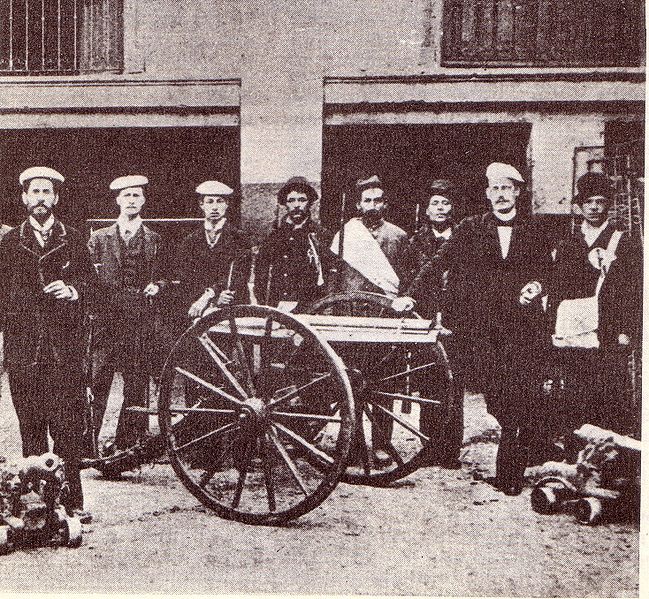
Pictured above is a Gatling gun that was used in the Revolución del Parque in 1890.




































 Subscribe in a Reader