Archive for the 'Eating' category

I Could Be the Salad Dressing King

dressingpost

If you love salad, this is not the country for you.

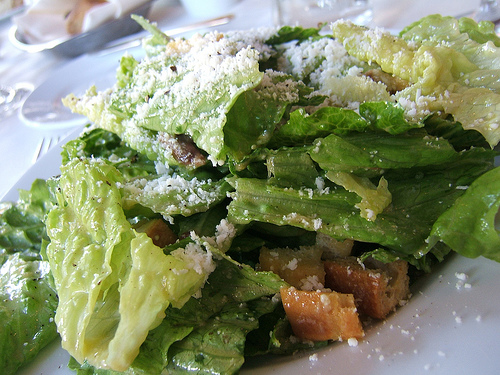
When we gather together with Porteños for the express purpose of eating, we often make a very simple mock Caesar salad with romaine lettuce, Parmesan cheese, and a dressing that consists of a garlic/salt paste, lemon zest and juice, Dijon mustard, and some olive oil. (In the US, we add croutons, but they’re hard to find here and I can’t be bothered to make them.)

The addition of salad to the meal is generally received with a low level of enthusiasm, at least initially, by the local set. Then, once my Argentine friends taste the green stuff, they invariably start raving…ooohs and aaahs abound. What is the recipe? What is in this salad? This salad is great!?!

Why does this simple concoction garner such attention? Because it actually has dressing on it, something that is nearly impossible to find here. Last night at an asado with friends, a wonderful older Argentinian-Italian man kept muttering to himself, mouth full of romaine, “cheese and lettuce, cheese and lettuce…I would never think to put those together and that they would taste so good! I can’t believe it…cheese and lettuce!”

What does pass for dressing in Argentina? I’m afraid it’s often a bottle of corn oil and a bottle of white or cider vinegar. If that’s not bad enough, the other dressing option is essentially a packet of mayonnaise. Good Lord, it can’t be a surprise that so few like to eat vegetables here!

Photo by Flickr user WordRidden used under a Creative Commons license.

More Adventures in Baking

chickpotpie1

chickpotpie2

I must be hungry, I’ve been posting about food a lot lately!

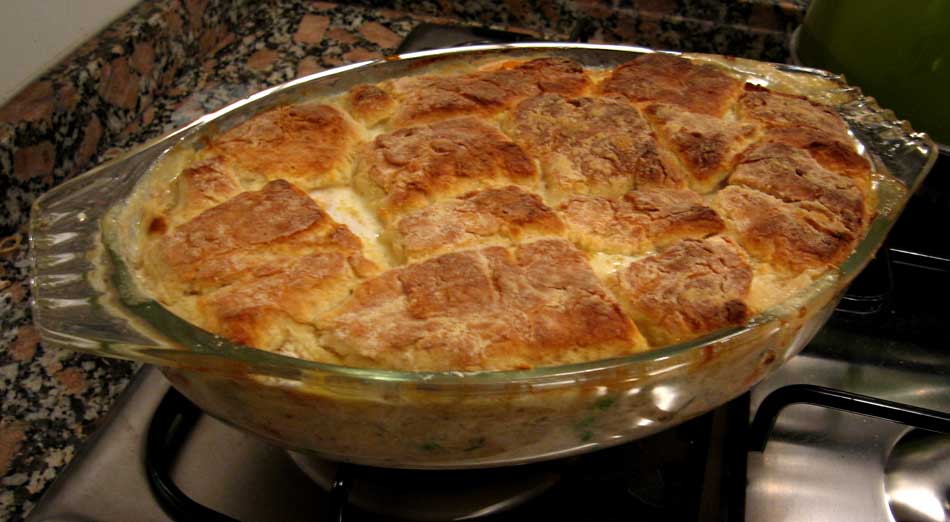
Last week, when Tom and I were looking for an easy meal to make out of a rotisserie chicken, we decided to attempt a chicken and dumplings type of dish using buttermilk biscuit dough.

What ensued was chaos.

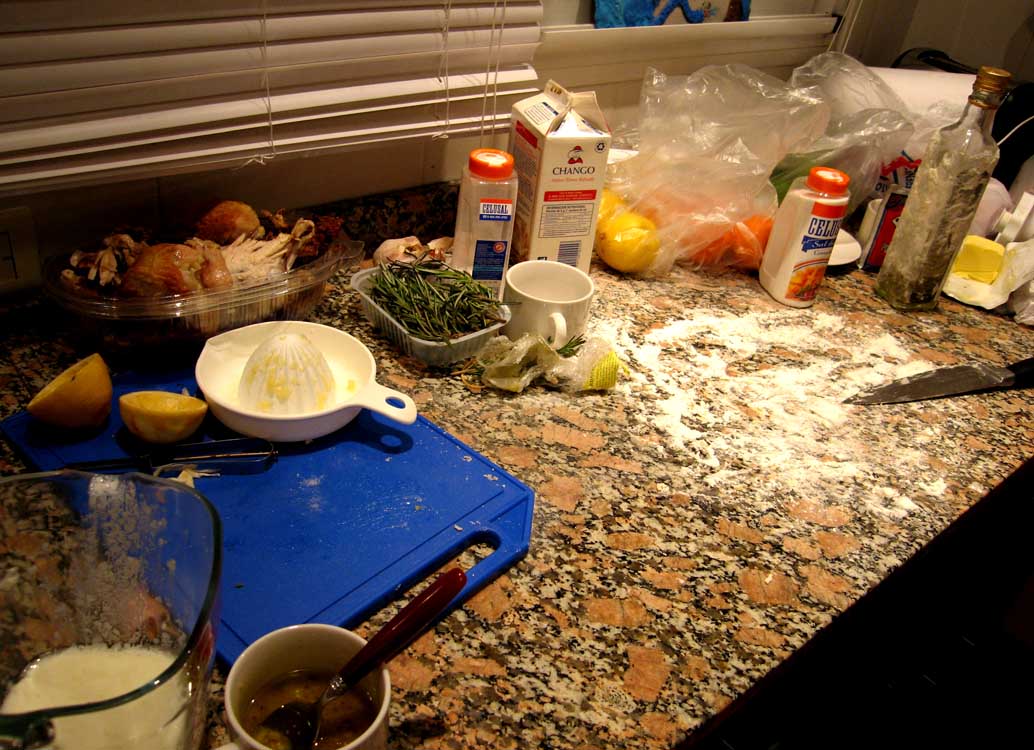
We didn’t have buttermilk, so we had to obtain some lemons to sour our own milk. We had a hard time finding edible frozen peas. We had to substitute massive amounts of baking powder for baking soda, which affects the flavor. We only have a tiny food processor, so I had to cut the butter into the dough in batches. I made half of a batch in the food processor and combined it with the buttermilk only to find we were severely short on baking powder, so Tom and the girls had to dash out and buy more while the first half of the dough was soaking up the moist ingredients.

After scouring the store’s three different sections that contained baking ingredients, the Offermann shopping team finally found the polvo de hornear and raced home. We didn’t have cake flour. We didn’t have a rolling pin, so I used the rectangular olive oil bottle to roll out the biscuit dough (pictured above). As mentioned previously, we had no measuring implements — we just eyeballed everything! We made a huge mess.

Unfortunately, our “easy” meal proved to be anything but; however, we did end up with a lovely looking chicken and dumplings that actually tasted good to boot!

(And, we felt righteous after cooking because we made our own chicken stock out of the rotisserie carcass.)

Mysterious Mercado Central

cornucopia

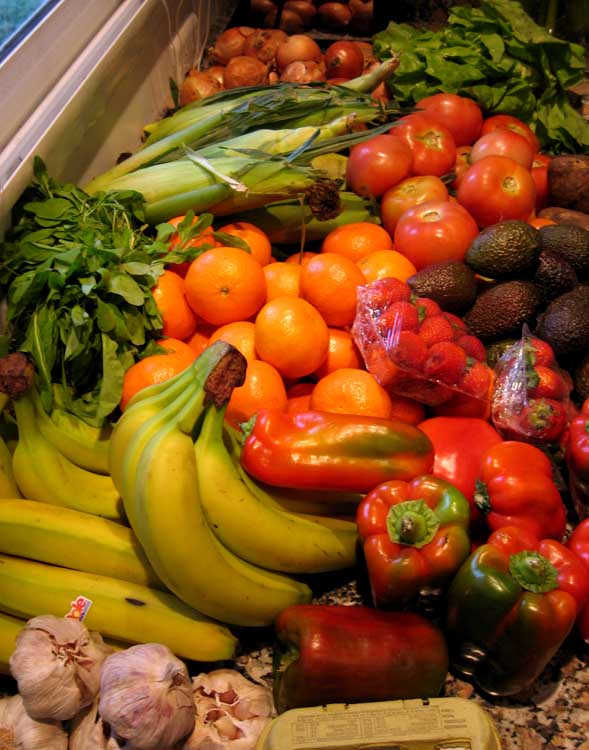
It was fruit and vegetable Friday yesterday, as you can see pictured here. (What is not shown in this mother lode of produce is the full-size paper bag of potatoes and the garbage bag filled with lettuce that now resides in our fridge.) Where did it all come from? Strangely enough, we’re not really sure.

Karen and Pablo are the parents of one of Zoe’s classmates. They cook three meals a day for their three kids (they set a high bar), and therefore go through a ton of food. Someone suggested to them that they were spending way too much money at the local verdulería, and recommended they try a place that I believe is called Mercado Central that is located somewhere on the way to the airport. It’s all very vague… .

Anyhow, Karen and Pablo attend the market on Fridays (which seems to be the best day to go) a couple of times a month and literally load their car to the gills with meat, produce, eggs…pretty much everything you can imagine from the category of “real food,” also known as the stuff you buy around the perimeter of a grocery store. We, on the other hand, just get a phone call saying, “come get some produce” and over to their house we race!

Happily, we can report that not only is the produce pretty tasty, but the prices are insanely cheap because they buy in such bulk. (Their kitchen often looks as if they plan to open their own fruit and vegetable stand.)

Total price for our haul (don’t forget the items not pictured above): $73 pesos, which is about $20 US. Thank you Karen and Pablo!

Soaring Glycemic Index, AKA Brunch

olsen

This is actually a review of the restaurant Olsen, a Scandinavian joint located in Palermo Soho in Buenos Aires, Argentina.

Our massive purchase of American carbs this last weekend further fueled a desire for more comfort food, so we went to the Western-style brunch at Olsen (this was our second trip) on Sunday.

It goes without saying that the environs are fabulous — a wonderful courtyard (smoking seating) and tall tall ceilings that enclose a chic, spare space filled with light. (Note, even in the cold, they had nice outdoor heaters for their nicotine-addicted clientele.)

Onto the food. Tom and I both had eggs. My scrambled eggs were super runny, so if you don’t like them that way, be sure to tell the waitstaff. The omelet, on the other hand, was quite dry and very bland. We also both had the homemade yogurt that is served with cereales. They aren’t kidding…it wasn’t really a granola on the top, but rather a bad corn flake. Under that layer, was a sickly-sweet fruit-based syrup. By the time we tunneled through the top two layers, we had no idea what the homemade yogurt tasted like since it had become defiled by the super sweet and the blandly crunchy!

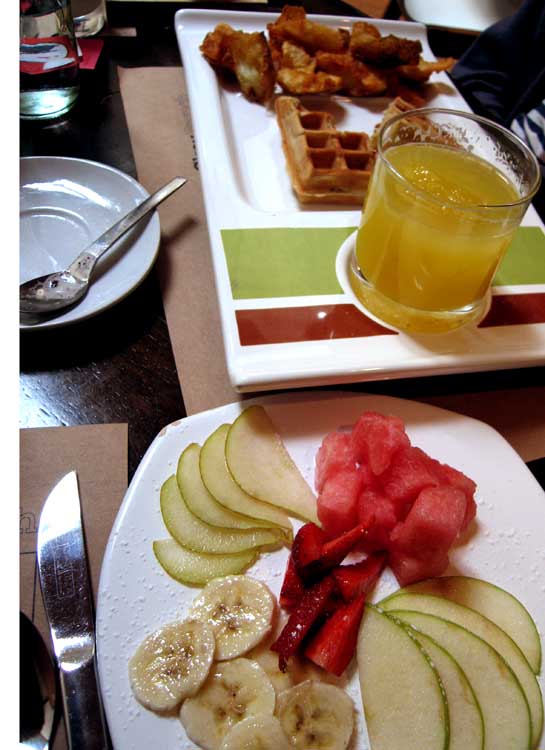
The girls ordered the waffles, which were a bit cakey, but were produced with a pleasantly sweetened batter. A flaw though — these corrugated carbs do not come with butter, jam, or syrup, so if you want something with which to garnish your gridded grains, you will need to ask. Their fruit salad was nice as well, the produce all tasted good and was appropriately ripe. Which brings me to the deep fried potatoes — those were universally popular at the table. 4, or I guess that’s 8, thumbs up.

Croissants, good. Orange juice, good. Cafe con leche, good. Hot chocolate, okay. (We didn’t realize that the latter was made with a powder which really needed to be vigorously stirred — the girls and I ended up with copious amounts of gloppy chocolate goop at the bottom of our cups.)

In short, the experience and ambience are great, but we felt the execution on the food fell short.

Boatload of Processed American Carbs

Tonight we made a very embarrassing trip to the Carrefour, where we filled our basket with lovely processed American carbohydrates. We were completely sheepish at the checkout aisle as we unloaded our imported crap food for weekend indulgence: Pepperidge Farm cookies (Milano, Nantucket, and Brussels), Pepperidge Farm Goldfish, and some Nestle choco puff cereal…I know, it’s horrible. And don’t even get me started about how much it all costs, because, well, it’s imported!

We have more goodies on the way from the US as well — some wonderful fabulous friends in BA (thank you Tim and Lori) just returned from a stateside jaunt and brought us back peanut butter, soy butter (for Zelda, who has nut allergies), and hair dye for me (f*#king aging)!

Viva la import products!

Introducing the Kiosko, Chino, Supermercado, and the Verdulería

There are four types of stores around which our world revolves: the kiosko, the Chino, the supermercado, and the verdulería. In general, when moving to Buenos Aires, I would recommend living within one or two blocks of at least two of these four types of stores to make your life easier. Where we are now in Las Cañitas (my new favorite neighborhood), we are within two blocks of all of these essential retail concerns as well as a smattering of fabulous butchers, delis, spice stores, natural food stores…we adore it here!

The Kiosko. These are very small convenience stores that are important when you have a toilet paper emergency late at night (living with three females has made Tom very aware of this phenomenon) or if you want to re-up the minutes on your pay-as-you-go phone. We also use these establishments for emergency moneda acquisition, but you have to be canny and hard-as-nails to get actual coins out of these proprietors!

The Chino. There is a large contingent of small grocery store owners that are of Chinese descent, therefore the name for these types of stores has become, Chino. It is always amusing to freak out the owners of these markets with some Mandarin conversation at check-out, especially with two little blond-haired Chinese speakers in tow! We frequent the Chino for quick staple runs — milk, yogurt, water, rice, etc. There is generally a small produce section in the store as well, but it is usually of lower quality.

The Supermercado. The Carrefour, the Disco, and the Coto are the three most ubiquitous grocery store chains. The mega versions of these purveyors carry electronics and household items, the more modest locations are just grocery stores. If you like to feel and select your own produce, this is where you would buy it, although quality varies dramatically from store to store and day to day.

It has taken Tom awhile to master the Spanish vocabulary required for checkout at the supermercado. First he has to select between efectivo or tarjeta (cash or credit), then he has to decide if he wants home delivery. Next, they ask if he wants his purchase charged in one payment or multiple payments. Lastly, they request a documento, which is supposed to be a DNI card or a passport. Tom usually just gives them his U.S. driver’s license, which often results in a visit from a manager, who has approved its use in every case but one.

The Verdulería are produce markets that dot the city’s streets. In general, I have a hard time buying produce from these vendors because I’m not thrilled about buying food that has been sitting out in the street all day, getting covered in the chemical-laden black exhaust which spews from the buses, but it often can’t be avoided as supermarket produce is often horrible. I find that it’s also a good idea to try to get a sense of when your local Verdulería receives shipments because unless you catch it off the truck, items like lettuce sit outside and wilt in the heat within about 30 minutes of delivery.

It has been my experience (and yes, I know it is not everyone’s experience) that these operators will pass off crappy product if you appear to be a transient tourist, so don’t be shy. Ask to see all of the produce they are bagging and feel free to reject their selections. Because they pick and you don’t, relationship building with your local vegetable merchant is a good idea if you are going to be living in the city for any length of time.

Boffo Banana Bread

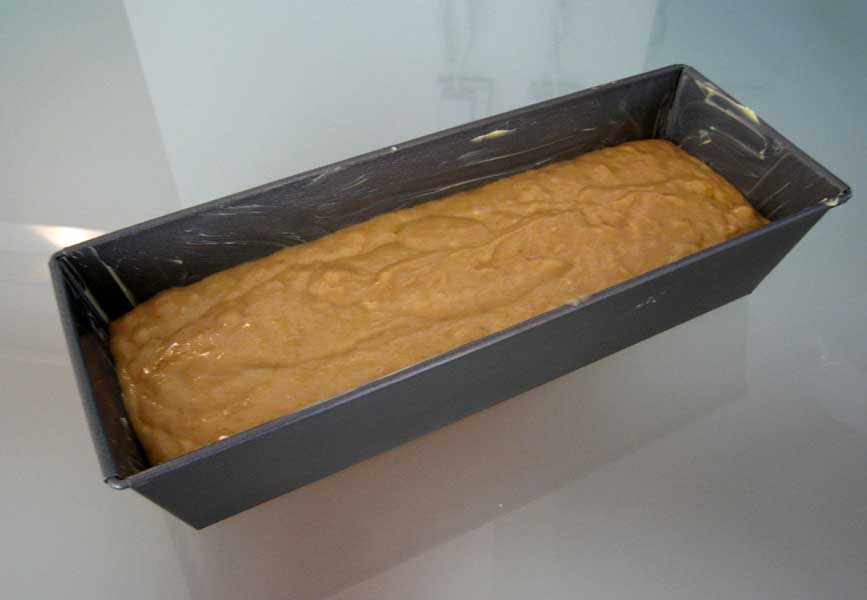
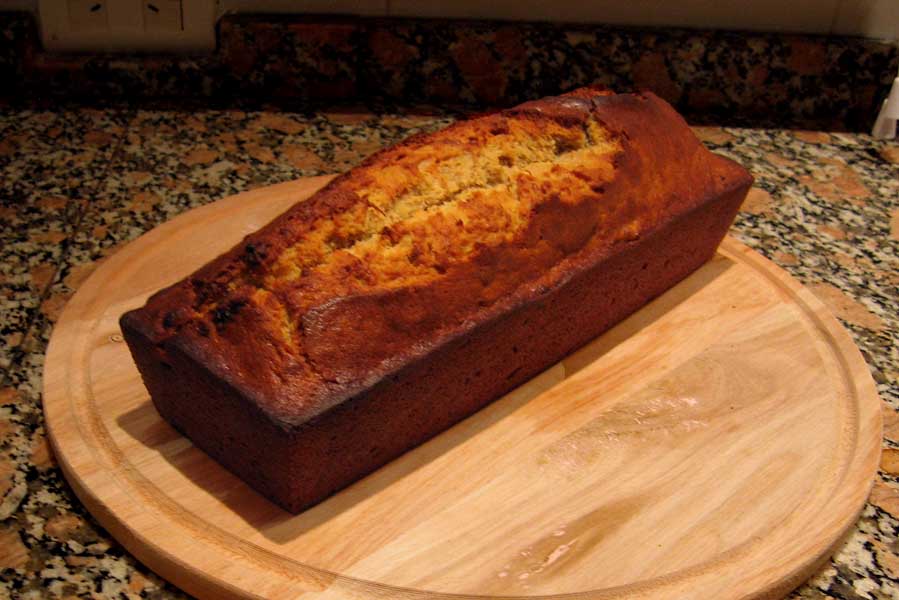
beforebananabreadafterbananabreadSome cool bloggers in Argentina post about the emotional highs and lows encountered while coming to the aid of a friend; me, I blog about banana bread…enough said.

This last weekend, we dipped our toe back into baking by taking a stab at our always forgiving banana bread recipe (actually obtained from my sainted mother). We thought, “we can do this…I mean, it’s not like baking is a science that requires exact measuring, right?” So, while Zoe was cavorting in Pilar with friends, Zelda, Tom and I went to work, refusing to let the the facts stop us: we had no dry measuring cups, no measuring spoons, baking powder instead of baking soda, and no wheat flour! With a wee bit of research on the Web about conversions accompanied by some dubious “eyeballing” as we added ingredients, we had ourselves some batter.

Actually, it was rather liberating baking with only a cursory concern about measurements. And, I’m happy to report that the results were fabulous, if a little blonder than we are used to due to the lack of wheat flour.

The banana bread was our BuqueBus snack food during our trip to Colonia, Uruguay this week to renew our visas.

‘Mericans at Dinner

There are many things that make one feel “so American” when one is living in Buenos Aires, such as, inadvertently slamming taxi doors, failing to execute the hello or goodbye cheek buss, failing to effusively greet or depart from acquaintances, using tu instead of vos, shopping at the Jumbo… .

Then there is the grand daddy of them all: showing up at a restaurant ten minutes before it opens, lurking outside, peering in the window like a starved big cat pacing its cage. Or my next favorite, going to a restaurant at between 5:00 pm and 6:30 pm (during tea time) and asking them if the kitchen is open enough to actually cook something. That was our modus operandi tonight.

This evening’s meal involved us going to our local corner cafe and pleading our case for some hamburgers, even though the rest of the citizenry was taking their tea time meal: coffee with a cookie or a tostado. To top it off, we were playing pickup sticks in the middle of the table, which really had the waitress rolling her eyes.

To recap: hungry family with young children begging for food at 6:30 pm and playing pickup sticks while they waited — it doesn’t get much more ‘Merican than that!!

Compare and Contrast Three Parillas

lacabreraJuana M.

This is our go-to parilla, blessed in all of its food, probably because it is located underneath a church just off of Libertador. We learned about it from a commenter who used to live in Argentina. This place is truly a mainstay for us. The meat is wonderful, they have a ginormous salad bar, the prices are reasonable, the atmosphere is classy, it is not touristy, there is seating for smokers as well as non-smokers (not really a plus for me, but you smokers will be happy). The only knock would be the desserts, which we have learned to avoid. Go out for helado afterward.

La Brigada

If you have friends or family in town and want them to experience old-world Argentinian service in a classic parilla, this is where you should bring them. Ian used to live in the building next door and would routinely witness VIPs arriving, such as police escorted buses bringing the national fútbol team to eat at the restaurant. The meat we had here was truly wonderful, and we were very pleasantly surprised by their caprese salad (astonishingly fresh vine-ripened tomatoes). The service also was well executed…all in all we quite enjoyed it. More good news, they have recently expanded, so it’s a much easier to gain a seat. In the area of the dining room where we enjoyed or meal, all of the patrons appeared to be Porteños.

La Cabrera

This parilla in Palermo Soho would receive my vote for most overrated in the city. It is in every guidebook and is overrun with tourists. Pictured above is the lomito, which I ordered, and after Zelda tasted it she announced, “Mommy’s meat is watery.” She was right. As you can see in the photo, they have flashy presentation, but it falls flat when it comes to execution. Each main course is served with various inedible condiments, including peas in some sort of a mayonnaise sauce, a ketchup-mayonnaise sauce, an onion relish, a bit of hearts of palm, garlic potatoes (uber garlic flavor), and carrot and potatoes in mayonnaise. We disliked all of the condiments and hated to waste the food. Every table also receives a round platter filled with more circular little condiment bowls containing other small dishes, most of which we disliked as well. I would have much preferred to get rid of every little condiment bowl on the table and eaten an ensalada mixta instead. The servings are HUGE, one could easily split an entree between two adults. On the plus side, they end your meal with a nice flute of champagne!

Tom Grills, Argentina Style

asado1Grillmaster Tom brings you this recap.

Sunday is the traditional day for asado in Argentina. As parties go, this one has a pretty simple formula: start a fire, grill up a big pile of meat, hang out with family and friends for the afternoon, and eat until you are no longer able to move.

Our current apartment comes complete with a beautiful parilla, and we’ve hosted one asado already. But, on that occasion, my duties involved nothing more than making the salad, since our friend Dani expertly handled all of the grilling. For various reasons, I had not yet taken the helm of the parilla. I had not yet assumed the role of asador.

(To my mind’s ear, “asador” is always said with great drama. Think “matador” and say it with a flourish and, perhaps, a stamping of your foot.)

Why the hesitation to grill?

For one, you can’t start grilling until you’ve got some meat, and I’m intimidated by the butcher. Even in the US, I never looked forward to buying meat. I would often go marching up to the meat counter, recipe from Cook’s Illustrated in hand, and explain that I was looking for a specific cut. (Cook’s Illustrated has very strong opinions on which cuts are best for their recipes.) The butcher would then tell me they didn’t have said cut and look at me like I was crazy for asking.

And, that was in English! Here, I get to do the whole song and dance in broken Castellano and pantomime.

Furthermore, I’m totally spoiled by my gas grill in the US. Press a button and you’re ready to cook ten minutes later. Unfortunately, there’s no such thing as a push-button parilla. Oh no, you’ve got to go all primitive and caveman-like and get a fire started using nothing more than matches and a bag of charcoal.

Since I had no kindling, no lighter fluid, and little experience, I was concerned about my fire-starting skills. Could I really set the charcoal ablaze with some scrap paper and an empty Fruit Loops box? At first, it didn’t look too promising. Zoe offered to help by throwing dried leaves onto the top of the fire, and while that pleased the inner pyromaniac in both of us, it didn’t make the slightest difference to actually getting the charcoal lit.

In the end, Zoe saved the day. She spotted a few dead branches caught in the tree that overhangs our terrace, and using a rope she got at a knot-tying demonstration, she was able to lasso several and pull them down. We broke up the branches, created a little teepee of twigs, and pretty soon we had a roaring fire going.

With that problem solved, I started grilling. And, I didn’t really know when to stop. As the photos show, for just a family of four, I grilled a lot of meat. (We call that having an asado, Ian-style, since he started the family tradition of buying way too much meat for the occasion.)

The results from my first outing as asador:

* Chicken. Perfectly done. Mostly due to Michele’s brining and her expertly prepared wet rub of cumin, lemon, garlic, olive oil and chilies.

* Bife de Chorizo. (New York Strip Steak) Sadly, these were a little over-done. In Argentina, they would call this level of cooking a punto. They definitely were not jugoso (rare). Obviously, I was paying too much attention to chowing down on the chicken at the time, and not enough to my steaks still on the grill.

* Pork Roast. This was the wild card. I’m not even sure what cut of pork this is, and since we were all too stuffed with beef and chicken to eat any more, we just wrapped it up and put it in the fridge. Hopefully, it can form the basis of a leftover dinner later this week.

All in all, not too bad for a first attempt.

asado2asado3asado5